
Taiwan's universities are taking lead in the transformative revolution that positions the nation as a global leader in automation and intelligent systems. In this edition, we take a look at how Taiwanese universities work hand-in-hand with the government, industry partners, and global institutions to drive the development of smart manufacturing in Taiwan and strengthen supply chain globally.
Strengthening Infrastructure
Smart Taiwan 2030 Initiative To Propel Island's Smart Manufacturing Capabilities Further
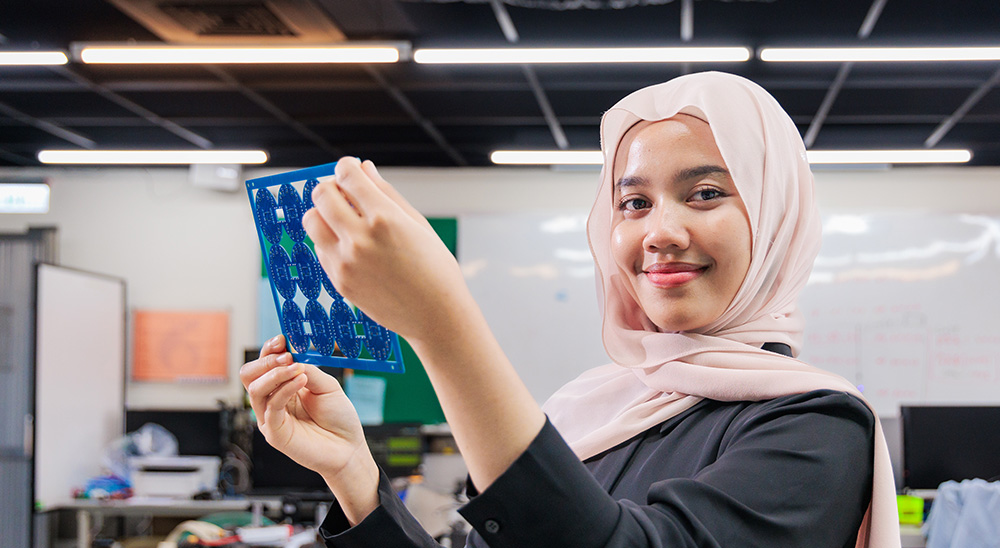
An electrical engineering student at Cheng Shiu University (CSU). Photo: FICHET
The government is advancing its Smart Taiwan 2030 initiative by leveraging Taiwan's strengths in high-end smart manufacturing. This initiative includes programs focused on building a competitive technology ecosystem and driving industrial digital transformation. To achieve these goals, the government is implementing the Ten Major AI Infrastructure Projects initiative, which identifies four core technological priorities. Among these, smart robotics and silicon photonics are closely tied to smart manufacturing, both requiring university involvement to educate the next generation of talent.
Smart robotics has broad applications, including industrial robots and inteligent systems. To expand smart robotics production capacity, the National Science and Technology Council (NSTC) plans to establish a TSMC-model robotics startup by 2026. NSTC is also working with the Industrial Technology Research Institute (ITRI) and the Ministry of Economic Affairs to establish a research center in Tainan. With its close proximity to the Southern Taiwan Science Park, this research center aims to attract more smart manufacturing-related companies specializing in sensors, machine tools, electronic components, and related fields to set up operations there.
Located in southern Taiwan, I-Shou University (ISU) and Cheng Shiu University (CSU) hold distinct advantages in this wave of government-led smart robotics development. I-Shou University established its Smart Design and Manufacturing Center as early as 2020, featuring specialized laboratories that are designed to provide hands-on training for students. The center also actively collaborates with industry partners to integrate smart manufacturing across diverse sectors. Cheng Shiu University's several engineering and computer science departments have all made pivotal move to incorporate smart manufacturing in curriculum, and the result is evident in TSMC Smart Manufacturing Center's special campus recruit of students earlier this year. Students at both universities stand to benefit significantly as smart robotics and smart manufacturing flourish in southern Taiwan.
Silicon photonics, another one of the four core technologies, has broad applications. In smart manufacturing, it enables ultra-high-speed data transmission and can be applied in photonic sensors. National Yang Ming Chiao Tung University (NYCU) is one of Taiwan's leading universities researching silicon photonics. The university's Department of Photonics and Silicon Nanophotonic Group have established themselves as leaders in this cutting-edge field, conducting groundbreaking research while actively collaborating with industry partners to accelerate real-world applications and commercial development.
Quantum technology, also identified as a key technological priority, will significantly boost the efficiency and intelligent development of smart manufacturing. The future integration of quantum computing and artificial intelligence will become a key technology for achieving precise decision-making and resource optimization in smart manufacturing. Yuan Ze University (YZU) has recently rolled out the one-of-a-kind quantum technology and AI program to cultivate high-caliber technological talent. In addition, National Sun Yat-sen University (NSYSU), a major institution in southern Taiwan, offers comprehensive engineering programs spanning robotics, smart manufacturing, and quantum technologies.
Smart Robotics x Healthcare
Universities Addressing Societal Problems Through Smart Manufacturing
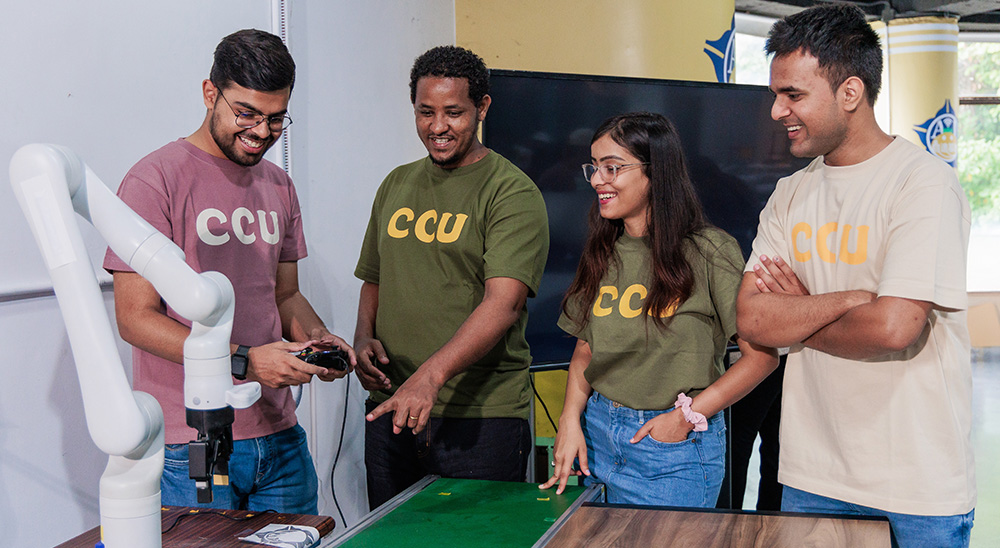
National Chung Cheng University (CCU) students operating on a robotic arm. Photo: FICHET
Taiwan's universities are applying smart manufacturing to address issues of precision medical implants and medical personnel shortage. National Chung Cheng University's (CCU) Advanced Institute of Manufacturing with High-tech Innovations applies the precision only achievable through smart manufacturing to precision medical devices. By integrating resources from medical, engineering, and industrial sectors, CCU collaborates with hospitals and industries in Chiayi and Tainan to produce high-quality, low-cost, personalized medical implants, laying a solid foundation for Taiwan's precision medicine industry.
Technologies developed for smart manufacturing can also be applied to robotics. National Taiwan Normal University (NTNU) and Mackay Memorial Hospital's "Smart Nursing Cart" utilizes autonomous navigation and voice interaction technology. This innovative solution reduces repetitive, labor-intensive transport and operational tasks, helping alleviate the daily burden on nursing staff while enhancing care quality.
These partnerships showed CCU and NTNU, like many other universities in Taiwan, are actively addressing societal problems. Through interdisciplinary training and continued partnerships with technology companies, universities are driving Taiwan's smart manufacturing ecosystem forward.
Supply Chain Resilience
Advancing Supply Chain Resilience and Smart Logistics

International students at Feng Chia University (FCU). Photo: FICHET
Supply chain resilience is a critical topic in smart manufacturing and addressed in the Smart Taiwan 2030 initiative. At the forefront of supply chain resilience efforts, National Chengchi University (NCCU) collaborated with NSTC to host the 2025 Global Supply Chain Resilience Forum in Taipei. The event brought together academics and corporate leaders to discuss strategies concerning AI, drones, energy, and semiconductors. NCCU's involvement extends far beyond event hosting—the university, renowned for its world-class business management programs, not only offers supply chain management programs but also conducts research through the Supply Chain Resilience Center, a partnership with Czechia's Charles University.
Furthermore, supply chains are intrinsically linked to logistics and transportation, with multiple Taiwanese universities conducting related R&D and applications. The Supply Chain Management and Industry Dynamics Research Lab at National Central University's (NCU) Institute of Industrial Management focuses on developing algorithm-based planning systems. The lab also looks into resource sharing, optimization, recycling, and reuse into the existing supply chain in "Green Supply Chain" research. Meanwhile, Feng Chia University's (FCU) Intelligent Transportation and Logistics Innovation Center utilizes cutting-edge communication technologies for smart manufacturing applications, providing innovative logistics solutions for government agencies and industry partners. FCU also offers degree programs in logistics through its Department of Transportation and Logistics.
Mandarin Education
NCHU Showcases Taiwan's Culture and Language through the Huayu BEST Program
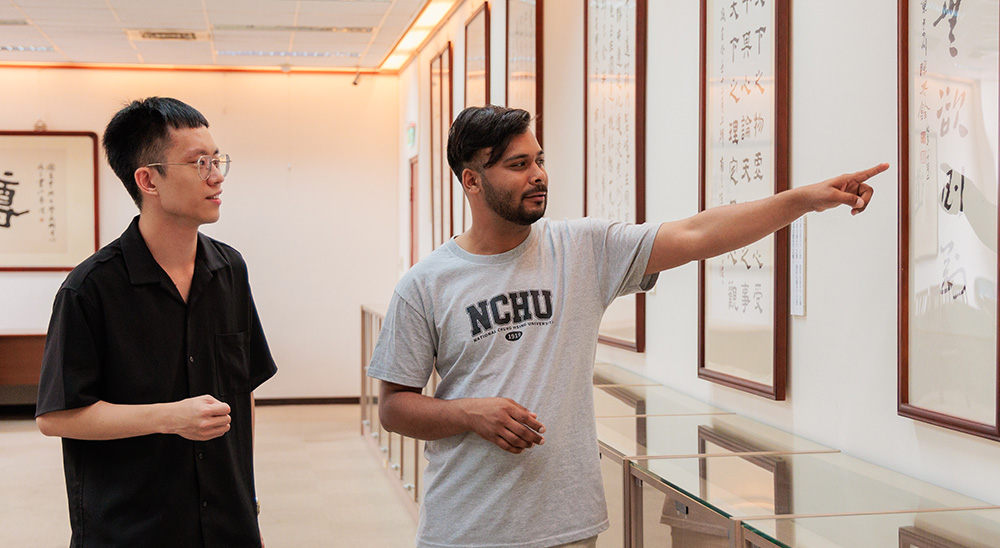
National Chung Hsing University (NCHU) students at its art center. Photo: FICHET
This summer, supported by the Ministry of Education's Huayu BEST program, National Chung Hsing University (NCHU) partnered with the City University of New York, Brigham Young University, and the University of Texas at Dallas to launch the third annual Mandarin study tour. On June 2, 54 American faculty and students arrived to begin one- or three-month programs of Mandarin language study and cultural exploration. NCHU designed specialized courses, a language buddy system, and multi-layered cultural experiences: exploring Taichung's historic districts, making sun cakes, visiting Sun Moon Lake to experience tea production, and learning about indigenous cultures. Through integrated in-class and extracurricular activities, students quickly grasp Taiwan's diverse facets while strengthening their Mandarin proficiency.
The Huayu BEST program, launched in 2021, funds partnerships between Taiwanese universities and European/U.S. institutions to exchange students and teachers, send Mandarin instructors and TAs abroad, and offer scholarships that bring foreign students to Taiwan to study Mandarin.
From Museum to Campus
Partnership Enhances Taiwan's Global Mandarin Learning Appeal
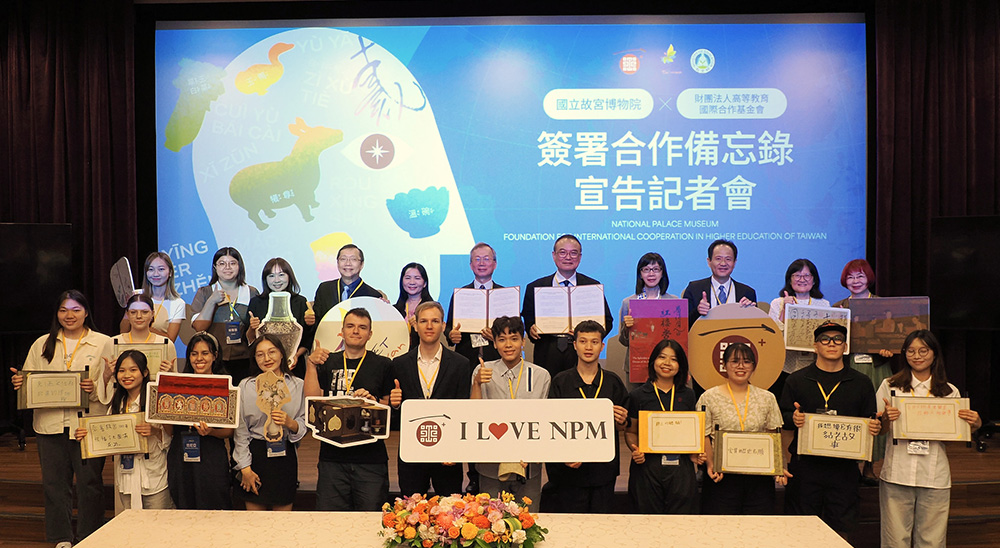
FICHET-NPM partnership signing ceremony. Photo: NPM
As part of its centennial initiative, the National Palace Museum (NPM) and the Foundation for International Cooperation in Higher Education of Taiwan (FICHET) have signed an agreement to position the NPM as a hub for international Mandarin learning and culturally immersive education. Backed by the Ministry of Education, the partnership leverages the museum’s vast collections to integrate language study with authentic engagement in material heritage.
This partnership strategically establishes Taiwan as the premier destination for immersive Mandarin learning, creating unprecedented opportunities for international students to engage with the language in its authentic cultural context. The University of Taipei (UT) stands out as a leading institution that exemplifies this approach to language education. UT integrates rigorous Mandarin pedagogy with historical and cultural perspectives. Through blended digital resources and experiential projects, UT enables learners to internalize Mandarin as a living cultural medium—aligning seamlessly with the innovative objectives exemplified by the NPM–FICHET collaboration.
Growing Appeal
Taiwan Strengthens Global Talent Attraction Through Policy Reforms

A student of Tamkang University (TKU) at its library. Photo: FICHET
Taiwan has implemented comprehensive policy reforms to attract foreign professionals by lowering barriers and streamlining settlement pathways. Key changes include expanding university graduate eligibility from top 200 to top 1,500 institutions (waiving work experience requirements), enabling high-earning Gold Card holders to apply for permanent residency after one year, and expanding the six-month digital nomad visa program. Additional improvements include work permits for Gold Card spouses, expanded social protections without requiring permanent residency, and counting study time toward residency requirements (1-3 years depending on degree level). These reforms come in a time when Taiwan's appeal as a study-work-innovation destination is growing. Taipei reached 14th place in QS Best Student Cities 2026 rankings, while four other Taiwanese cities ranked in the top 150, demonstrating strong academic infrastructure.
Building on these reforms and Taiwan’s rising status as a study‑work hub, Tamkang University's College of Engineering offers a strategic gateway: its AI‑Driven Smart Machinery and Sustainable Manufacturing program integrates AI, intelligent production, and green transition in a bilingual learning environment. This program also provides industry-academia projects and internship matching to enhance students' competitiveness for establishing careers in Taiwan, aligning with Taiwan's new policies.
FICHET & Study in Taiwan
FICHET Drives Taiwan's Global Higher Education Expansion Through Strategic International Partnerships
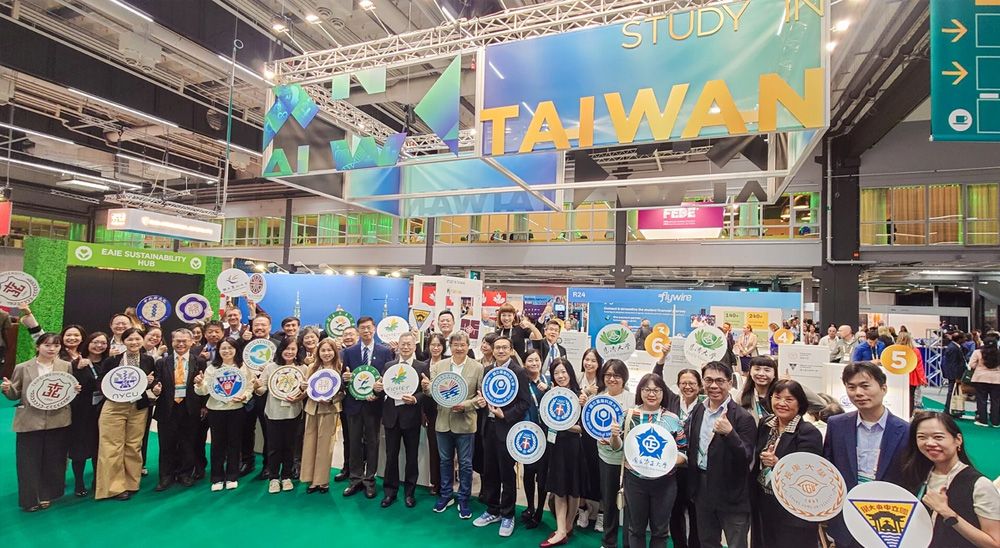
FICHET and Taiwan university representatives at EAIE 2025. Photo: FICHET
FICHET took part in three major international higher education events in Q3 2025, strengthening Taiwan's influence in global academic cooperation. At the EAIE Conference in Gothenburg, Sweden, the foundation coordinated participation from 19 Taiwanese institutions and nearly 50 delegates at Europe's premier international education event. This engagement built on impressive bilateral exchange statistics, with over 27,000 European students studying in Taiwan and over 50,000 Taiwanese students in Europe. Taiwan and Europe also share many successful scholarship programs, including 131 Taiwanese students benefiting from the Erasmus+ Mundus Joint Master Degree program and 348 European participants in the Taiwan-Europe Semiconductor Short-term Training Program.
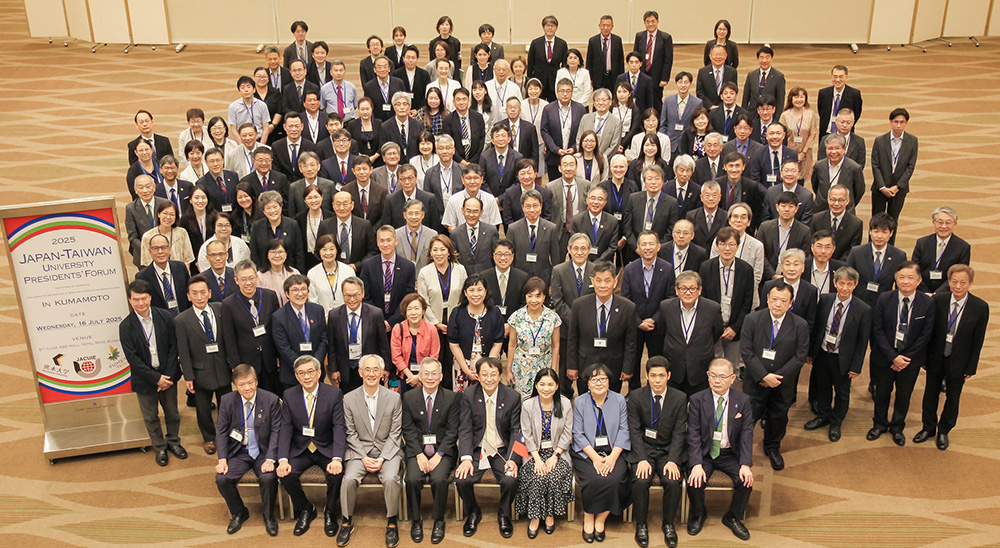
Taiwan-Japan University Presidents' Forum 2025 in Kumamoto, Japan. Photo: FICHET
The Taiwan-Japan University Presidents' Forum in Kumamoto represented a significant milestone as the fourth in-person biennial event since 2016, co-organized with the Japan Committee of Universities for International Exchange. With approximately 160 representatives from over 80 universities participating, the forum addressed critical themes including digital transformation of higher education, university-industry collaboration, and student exchange programs. Japan is Taiwan's top source of international students, with 8,779 Japanese students currently studying in Taiwan, including over 3,200 in Mandarin programs. An exhibition designed to attract Japanese students was also held alongside the forum.
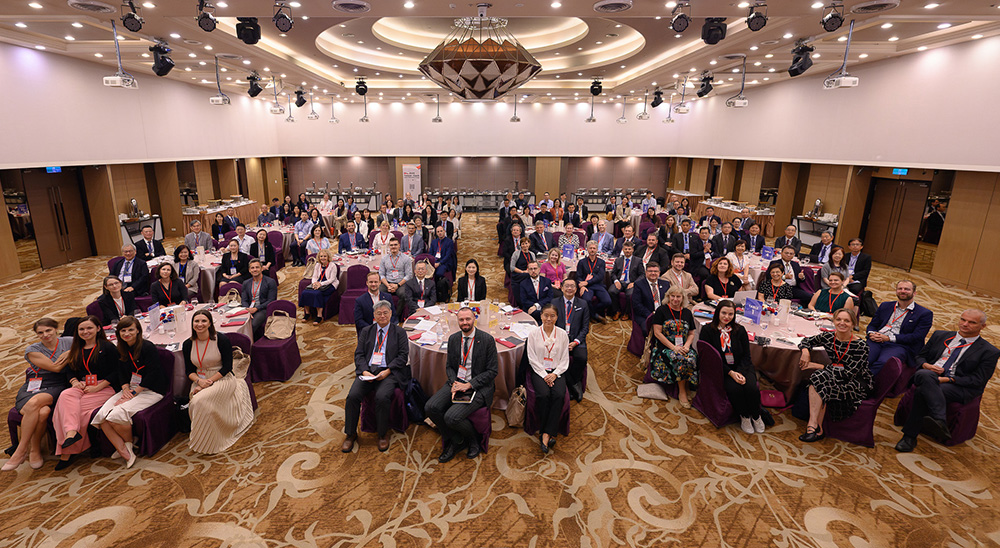
Inaugural Taiwan-Czech Higher Education Forum in Taipei. Photo: FICHET
Meanwhile, the inaugural Taiwan-Czech Higher Education Forum in Taipei marked a historic first, bringing together nearly 100 representatives from 51 Taiwanese institutions and 17 Czech universities to explore industry-academia collaboration and talent cultivation opportunities.
We hope you found the content of this edition helpful. If you have any suggestions or comments, please let us know by writing us at fichet@fichet.org.tw. We appreciate your interest in Taiwan's higher education.
From Our Students
❝ I shifted my research to medical robots for my Ph.D. thesis, a relatively new field in my country. I aspire to be one of the young researchers in my country who specializes in mechanical design for medical applications.❞ — Nguyen Phu Sinh (Vietnam) PhD student at the Department of Mechanical Engineering, National Central University
❝ My interest in robots and motors led me to choose mechatronic engineering. Anyone looking for a challenge and a richly rewarding experience would benefit from studying in Taiwan.❞ — Alonso Britos Joel Elias (Paraguay) B.Sc. student at the Department of Systems and Naval Mechatronic Engineering, National Cheng Kung University



![[FICHET Higher Ed in Taiwan Newsletter] Taiwanese Universities Advancing Smart Manufacturing to Support National Initiatives](/album/news/5e8945f00acf54fe9248abcdw1200.webp)
![[FICHET Higher Ed in Taiwan Newsletter] Taiwanese Universities Advancing Smart Manufacturing to Support National Initiatives](/album/news/5e8945f00acf54fe9248abcdw500.webp)

![[Forward News] 𝐈𝐍𝐓𝐄𝐍𝐒𝐄 𝐏𝐫𝐨𝐠𝐫𝐚𝐦𝐬 (International Industrial Talents Education Special Program)](/album/files/97160f98980cabe554243950+cw500h280.webp)
![[Forward News] MOE Short Term Research Award](/album/news/6697338f86479+cw500h280.webp)
![[FICHET Higher Ed in Taiwan Newsletter] Flying High in Higher Ed: Taiwan's Unmanned Revolution](/album/files/c859324572bdc94694075dae+cw500h280.webp)

![[Forward News] TSMC fab in Japan attracts semiconductor students to Taiwan](/assets/img/default_cover.webp)

