Journey to Studying in Taiwan and Research Focus
I hold a bachelor’s degree in Environmental Science from Ho Chi Minh City University of Sciences – Vietnam National University. My ambition to contribute to the improvement of coastal erosion and marine debris issues in the South of Vietnam significantly influenced my decision to study in Taiwan.
During my university years, I was deeply interested in forming international relationships. This interest led me to participate in international collaboration research during each summer vacation of my bachelor’s faculty. These experiences helped me realize that Taiwan was an ideal fit for my higher studies.
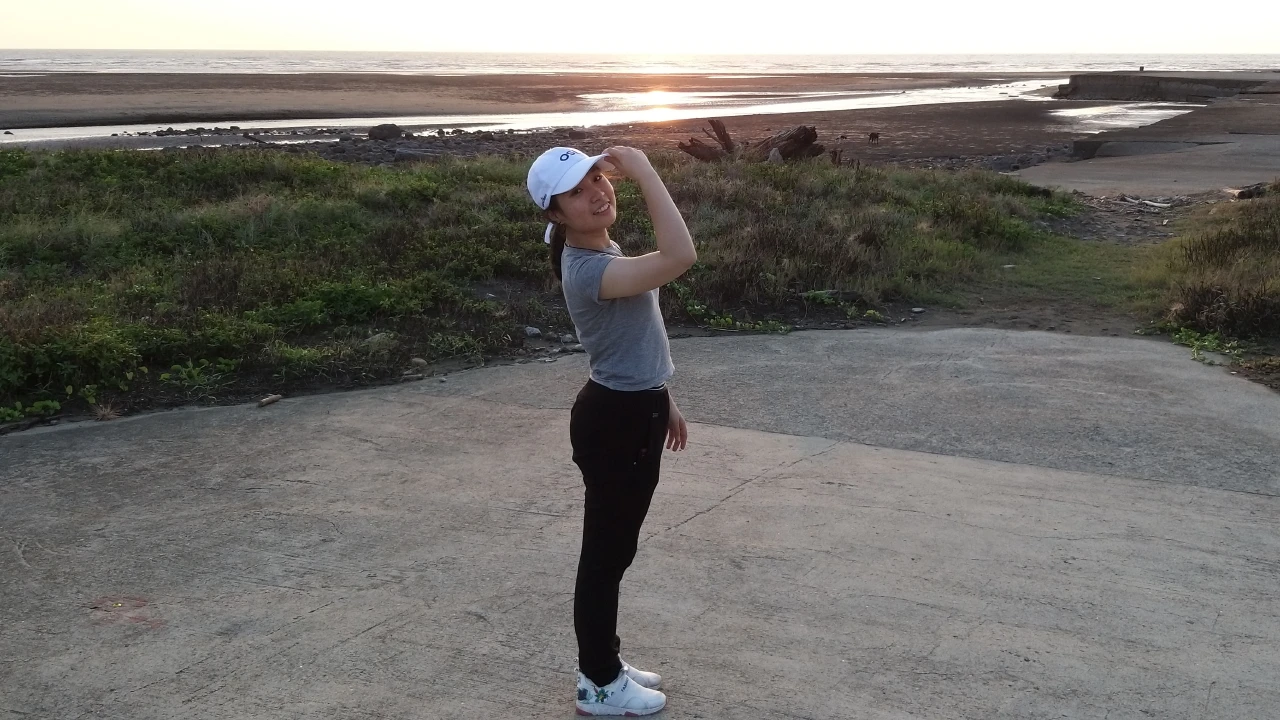
I am currently focusing on estimating the distribution of marine debris along the Taoyuan beaches, including Dayuan, Guanyin, and Xiwu. My coursework involves hydro-dynamics, environmental turbulence, atmospheric and oceanic processes, and data analysis using MATLAB and ArcGIS. The course that has captivated me the most is “Special Topics of Environmental Turbulence,” taught by my advisor, Professor Huang. It has opened up various ideas about the relationship between ocean waves, wind waves, turbulences, and beach litter distribution.
The most significant challenge in my application process was meeting the deadline. My acceptance coincided with a crucial company event, leaving me with limited time to complete the application. I overcame this by promptly understanding the procedures, taking necessary leaves from work, and diligently completing the online and offline application steps in time.
Comparative Study Experience
Comparing my study experiences in Vietnam and Taiwan, I note significant differences in research equipment, courses, and classroom learning. Taiwanese universities offer advanced and abundant research tools, allowing for streamlined research processes and more time for other activities. In Vietnam, the limited and less advanced equipment necessitated a deeper understanding and careful handling of every step. The Vietnamese undergraduate curriculum was broader, covering various fields related to my major. In contrast, Taiwanese courses are more focused on my main research area, allowing for concentrated inquiry.
Classroom dynamics also differ. In Vietnam, large class sizes and a traditional teaching style predominated, whereas in Taiwan, smaller classes and interactive learning with professors have been a refreshing change.
Future Plans and Aspirations
Studying in Taiwan has been immensely beneficial for my professional development. I’ve gained academic knowledge, cultural understanding, and soft skills. My research on a globally relevant topic will undoubtedly aid my future career as a coastal scientist. Additionally, learning a new language and interacting with locals has enhanced my capabilities in international relations and personal development.
My most significant achievements include strengthening my academic knowledge and learning a new language. Regular field trips with my advisor have helped me apply theoretical knowledge practically, and my language skills have improved significantly, aiding in my everyday life in Taiwan.
After completing my studies, I aim to pursue a Ph.D. to further my research on beach debris, which is also the focus of my master’s thesis. While I am fond of Taiwan, its culture, and the kindness of its people, I foresee returning to Vietnam to share my knowledge and promote international research cooperation between Vietnam and Taiwan.
Advice to Prospective Students
For students interested in studying in Taiwan, I emphasize the importance of language learning. Understanding and speaking the local language not only facilitates cultural integration but also shows respect to the Taiwanese people. Most Taiwanese primarily speak Mandarin, so knowing even simple phrases can significantly ease the transition to life in Taiwan, particularly in the initial stages.