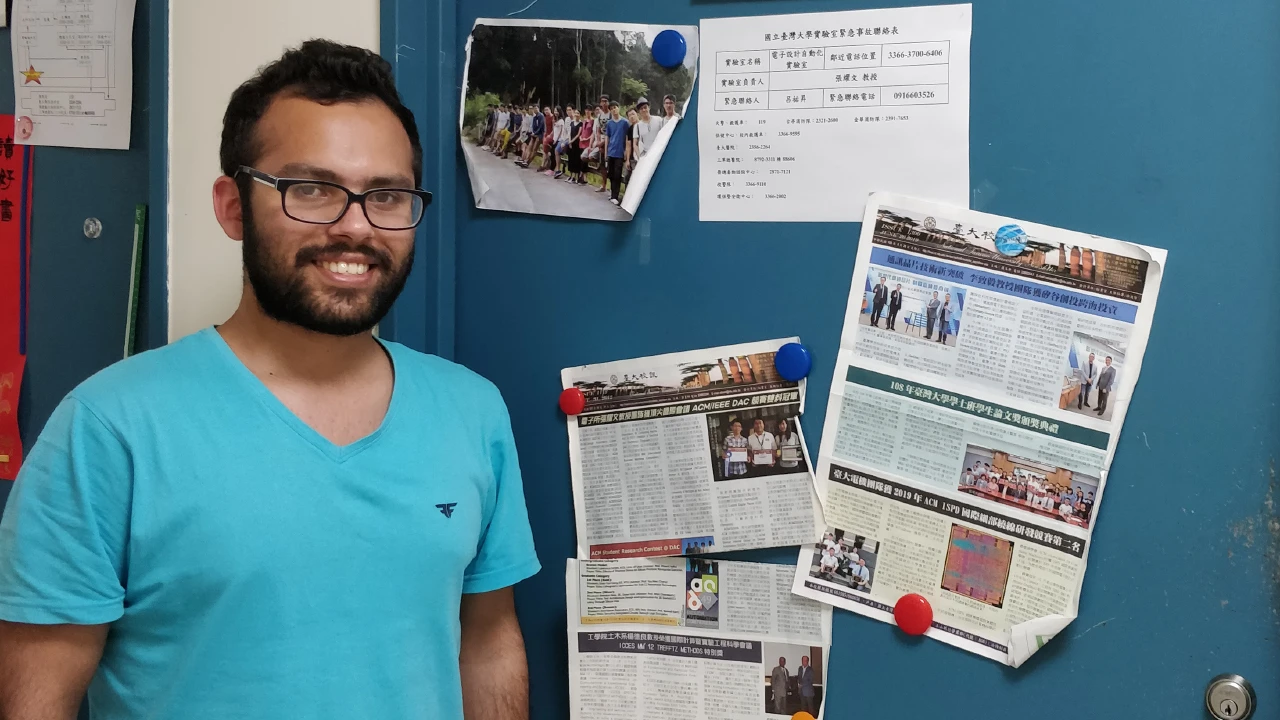
I am currently engaged in a Ph.D. program in Electronic Design Automation (EDA) under Professor Yao-Wen Chang at the Graduate Institute of Electronics Engineering, National Taiwan University, Taipei. Prior to this, I worked as a Lab Engineer at the National Institute of Technology in Delhi for five months, where I was involved in FPGA implementation of the Indian Regional Navigation Satellite System (IRNSS) Receiver and assisted professors in teaching digital and analog circuits to Bachelor’s and Master’s students. My passion for my work and an innate ability to work independently with creativity and enthusiasm have always driven my academic and professional pursuits. During my master’s, I completed a challenging chip design project in just one year and have continually sought to enhance my skills, such as learning to work on Linux Operating Systems for maintaining VLSI Lab servers.
Choosing Taiwan & Application Process
The choice to study in Taiwan was influenced by several factors. My fascination with electronic circuits since childhood and the desire to conduct research in chip design played a significant role. The lack of resources in Indian universities for practical knowledge in this field led me to look abroad. My master’s professor often praised the well-equipped labs and leading electronics companies in Taiwan, which motivated me further. The reputation of Taiwan as an electronic hub, known for its advancements in motherboards, monitors, and modems, also attracted me. Additionally, Taiwan’s accommodating nature towards foreigners, efficient utilization of resources, and the government’s investment in its people made it an ideal destination for my studies. Moreover, National Taiwan University’s standing as one of the top 50 universities globally in electronics solidified my decision to pursue my Ph.D. there.
The biggest challenge in applying to study in Taiwan was managing the extensive documentation required, such as medical check-ups and attestation of transcripts. Overcoming the initial panic, I systematically addressed each requirement. Choosing courses presented another hurdle, as many were in Chinese, but timely assistance and encouragement from Professor Yao-Wen Chang helped me navigate this challenge.
The Academic Experience
I began my Ph.D. in EDA in the Spring of 2020. This field encompasses tools used in designing and verifying integrated circuits, printed circuit boards, and electronic systems. The focus on automation allows for customization and enhancement of these tools. I am currently studying subjects like VLSI testing, and computer-aided analysis and optimization of integrated circuits. I particularly enjoy the freedom to experiment with different study methods and the availability of multiple information sources, such as research papers, journals, and video presentations.
The Indian education system, though adaptive and evolving, faces challenges due to its large population and limited resources. Though technology-friendly teaching methods and diverse student support initiatives exist, resources in government schools don’t match those of private institutions. In contrast, Taiwan offers a more balanced quality of education across government and private institutions, with a better teacher-student ratio, diverse research opportunities, especially in electronics, and well-equipped labs. The flexibility in course selection, the availability of diverse research topics, and the practical knowledge offered at NTU are notable. Additionally, the prompt feedback from teachers and the provision of individual systems for graduate students in Taiwan are significant advantages over the Indian system.
Future Plans and Career Prospects
Studying in Taiwan offers extensive benefits for my future career. The opportunity to learn from top professors and access state-of-the-art tools and technology is invaluable. The practical knowledge and research opportunities in Taiwan are unparalleled, and building a network within this academic community is beneficial. This educational experience in Taiwan is instrumental in securing a good job in my field.
Post-graduation, I plan to seek employment in IC design within Taiwan, given its renowned electronics industry. The abundance of research opportunities and the potential for further post-doctoral research make Taiwan an attractive place for continuing my career. Taiwan’s progressive education system and welcoming community further solidify my desire to stay and work here after completing my Ph.D.
Key Achievements and Learning
Since arriving in Taiwan, I have learned to be independent and adapt to a new environment. I have made valuable friendships and have received tremendous support from my lab mates and roommate. These experiences have boosted my confidence and helped me integrate into Taiwanese society.
Advice to Prospective Students
For those considering studying in Taiwan, remember that you will find a supportive community here. People are welcoming and helpful in everyday life. It’s important to research thoroughly before applying, ensuring you understand the language requirements and scholarship opportunities. With hard work and determination, success is achievable in Taiwan’s nurturing academic environment.