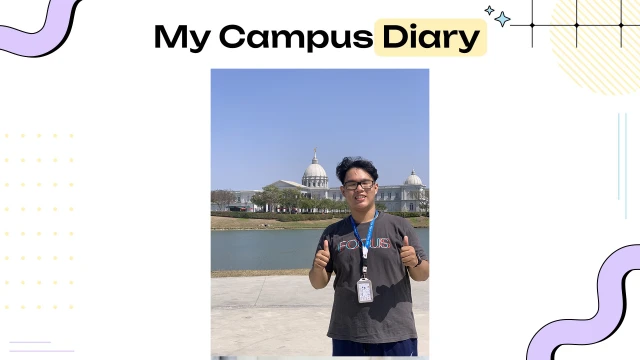
This intensive program provides international students with the opportunity to obtain up to two years of work experience in Taiwan after graduation. I believe this experience will be extremely valuable for my future career development.
The Alignment of Academic and Career Goals
I chose to apply to National Formosa University (NFU) because its Intensive Program in Extended Green Smart Manufacturing aligns closely with my academic goals and long-term career aspirations. NFU has a strong reputation in engineering, applied sciences, and industrial management, making it an ideal institution for students seeking both theoretical knowledge and practical industry experience.
The program offers comprehensive training in smart manufacturing systems, sustainable production, automation, and digital transformation. These subjects are highly relevant to global industrial trends and directly applicable to the challenges faced by developing economies like Vietnam. By studying these topics, I aim to improve my analytical skills, strengthen my understanding of industrial operations, and enhance my ability to apply sustainable management practices.
Post-Graduation Opportunities and Support
Another important factor is that this intensive program provides international students with the opportunity to obtain up to two years of work experience in Taiwan after graduation. This pathway allows me to apply the knowledge gained during my studies in real industrial environments, learn from Taiwan’s advanced manufacturing practices, and further develop my professional capabilities. I believe this experience will be extremely valuable for my future career development.
Additionally, NFU offers a supportive learning environment for international students, along with accessible tuition fees and scholarship opportunities. This allows me to focus fully on academic growth without facing heavy financial pressure.
An Interdisciplinary Focus on Sustainability
My decision to enroll in the Intensive Program in Extended Green Smart Manufacturing was influenced by both my academic background and my interest in sustainable industrial development. Having worked in research and valuation, I realized how important smart technologies and green production have become in shaping modern industries. When I learned about this program, I immediately felt that it matched the skills I want to develop.
What interests me most is the program’s interdisciplinary curriculum, which combines industrial management, automation, sustainable production, and digital transformation. These subjects are directly connected to global industrial trends and will help me strengthen my ability to analyze data, improve operational efficiency, and understand how smart manufacturing systems function in practice.
Expert Guidance in a Bilingual Environment
Another important factor is the opportunity to learn from experienced professors who specialize in smart manufacturing and industrial sustainability. Their expertise, along with NFU’s strong connection to local industries, gives students valuable exposure to real industrial environments. I believe that learning through both theory and hands-on experience will help me grow faster and develop practical problem-solving skills.
I am also attracted to the program’s bilingual learning environment, which will allow me to improve both English and Mandarin communication skills—an advantage for future international work. Overall, the combination of interdisciplinary training, practical learning opportunities, expert faculty, and industry exposure strongly influenced my decision to join this program.
Keys to a Successful Study Abroad
For international students considering studying in Taiwan, my first piece of advice is to approach the experience with an open mind and a willingness to adapt. Taiwan is a welcoming country with friendly people, but it also has its own cultural norms, academic expectations, and lifestyle differences. Being open to learning and embracing these differences will make the transition much smoother.
Second, I strongly encourage students to focus on building language skills, especially Mandarin. While many universities offer bilingual programs, having basic Mandarin ability will significantly improve daily life, communication, and part-time job opportunities. It also shows respect for local culture and helps students integrate more easily into the community.
Third, make full use of the academic resources and industry opportunities available in Taiwan. Many universities collaborate closely with local industries, offering internships, lab projects, and hands-on training. These opportunities not only enhance your professional skills but also give you valuable exposure to Taiwan’s advanced manufacturing and technology ecosystem.
Lastly, don’t be afraid to ask for help—whether from professors, classmates, or the university’s international student office. Taiwanese people are genuinely supportive, and building a network of friends and mentors will greatly enrich your study experience. Overall, studying in Taiwan can be an incredibly rewarding journey if you stay curious, proactive, and open-minded.
This website stores cookies on your device. These cookies are used to collect information
about how you interact with our website, which allows us to enhance your browsing
experience, analyze site usage, and improve our marketing efforts. By continuing to use this
site, you agree to our use of cookies. To find out more, see our
Cookie Policy.
Necessary Cookies
Always Active
Necessary cookies enable core functionality such as page navigation and access to secure areas.
The website cannot function properly without these cookies. These cookies can only be disabled by changing your browser preferences.
Analytics Cookies
Analytics cookies measure the usage of our website.
We use Google Analytics that gives us insight into how
many visitors come to our site and which parts of our
website visitors find most interesting. These analytics
enable us to continuously improve our website for a
user-friendly experience.
Marketing cookies make it possible to share the content
of our website through social media and help us with
marketing efforts. For more information, please see our
Cookie Policy.
Some cookies may need to be opted out directly from the service provider. Please
follow these links for more information: